Local property restoration guide
Help for a difficult day in Divernon, IL
Property damage can turn a normal day into a series of urgent decisions. A water leak may be spreading behind a wall. Smoke may have reached rooms far from a fire. A storm may have left a roof open to another round of rain. If you are dealing with damage in Divernon, IL, start with safety, then get a clear picture of what happened. Vital Restoration is available 24 hours a day, 365 days a year to discuss emergency restoration needs.
Our work spans residential and commercial properties across Springfield Area and the broader service areas in California, Oregon and Illinois. We do not treat a city name as a substitute for evaluating a property. Every building, material and loss is different. The right plan begins with what is happening at your address, who is affected, and whether the source of the damage is still active.
Call (866) 887-6115 when you need to talk through next steps. If there is a fire, a possible gas leak, an electrical hazard or an unstable structure, contact emergency services first and stay out of danger. Once the property is safe to approach, our team can help you understand the restoration process.
At a glance · Divernon
Make it safe
Stay clear of fire, electricity, contaminated water and unstable structures.
Record the damage
Photograph affected areas only when it is safe to do so.
Talk through next steps
Describe what happened and where the property is located.
What property owners in Divernon should know
Sangamon County hazard planning identifies severe thunderstorms, tornadoes, flooding and winter weather. These regional risks sit alongside everyday losses such as burst pipes, appliance leaks and kitchen fires. These are regional patterns, not a prediction about your property. The practical questions are more immediate: Is water still entering? Is it safe to enter? Have utilities been affected? Are children, pets, tenants or employees exposed to an unsafe area? Answering those questions helps prioritize the response.
Wind-driven rain can enter through damaged roofs or openings, while cold weather can create pipe and heating issues. Conditions vary by event and address. Damage often extends past the surface you can see. A ceiling stain can reflect water traveling from another room or floor. A smoky smell can linger in porous contents. A damp cabinet may conceal moisture against the wall. Even when the visible damage seems small, a careful assessment can reveal where restoration work should focus.
An older residence, rental building or commercial space may present different contents, structure and access needs. The cleanup plan should respond to the actual loss. For a business, downtime and access may affect the response plan. For a homeowner, protecting belongings and keeping the household informed can be just as important as the physical work. We take both sides seriously.
Local conditions. A property-specific plan.
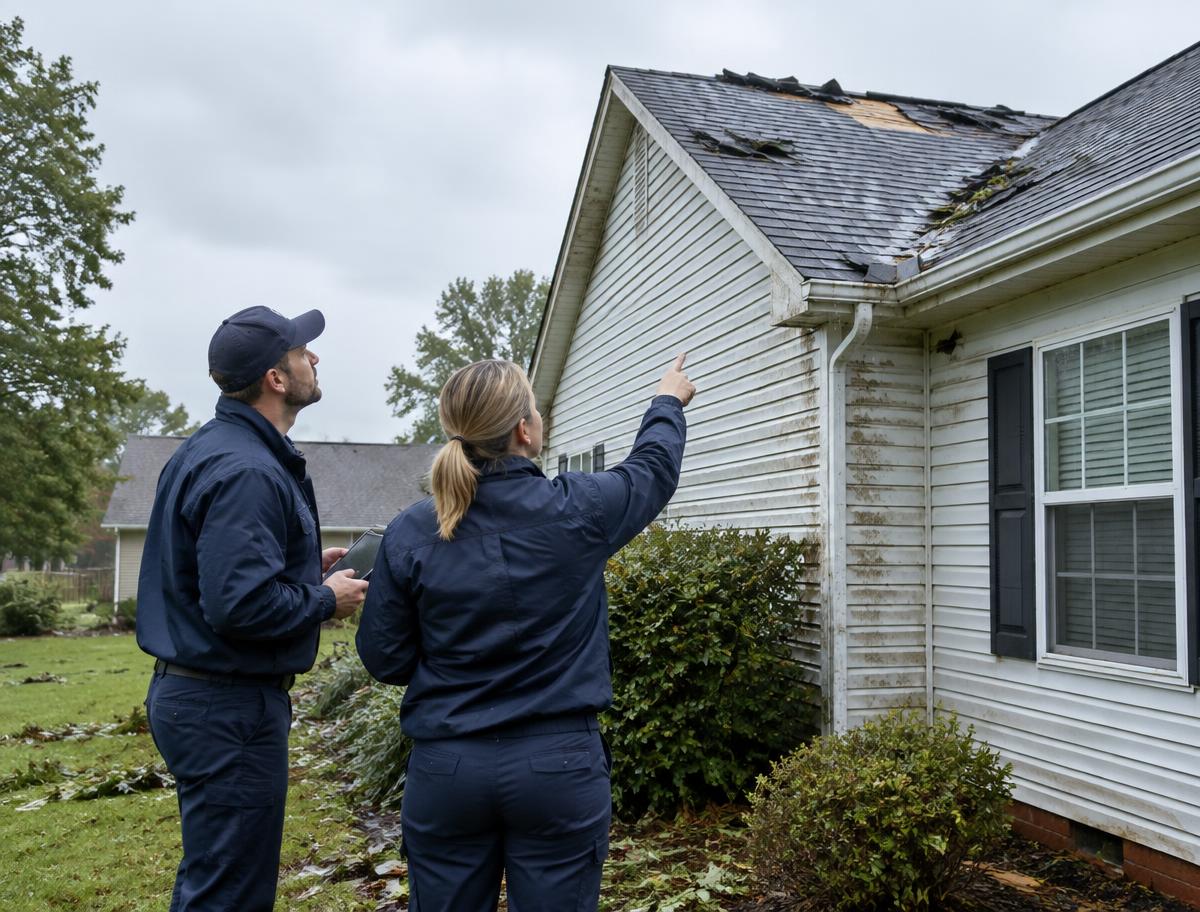
Rain, wind and smoke can affect buildings differently. The first priority is understanding what is happening at your address—not making assumptions about an entire city.
Water
Find the source and track moisture.
Fire & smoke
Assess the visible and hidden impact.
Storm
Secure openings and document damage.
Water damage restoration in Divernon
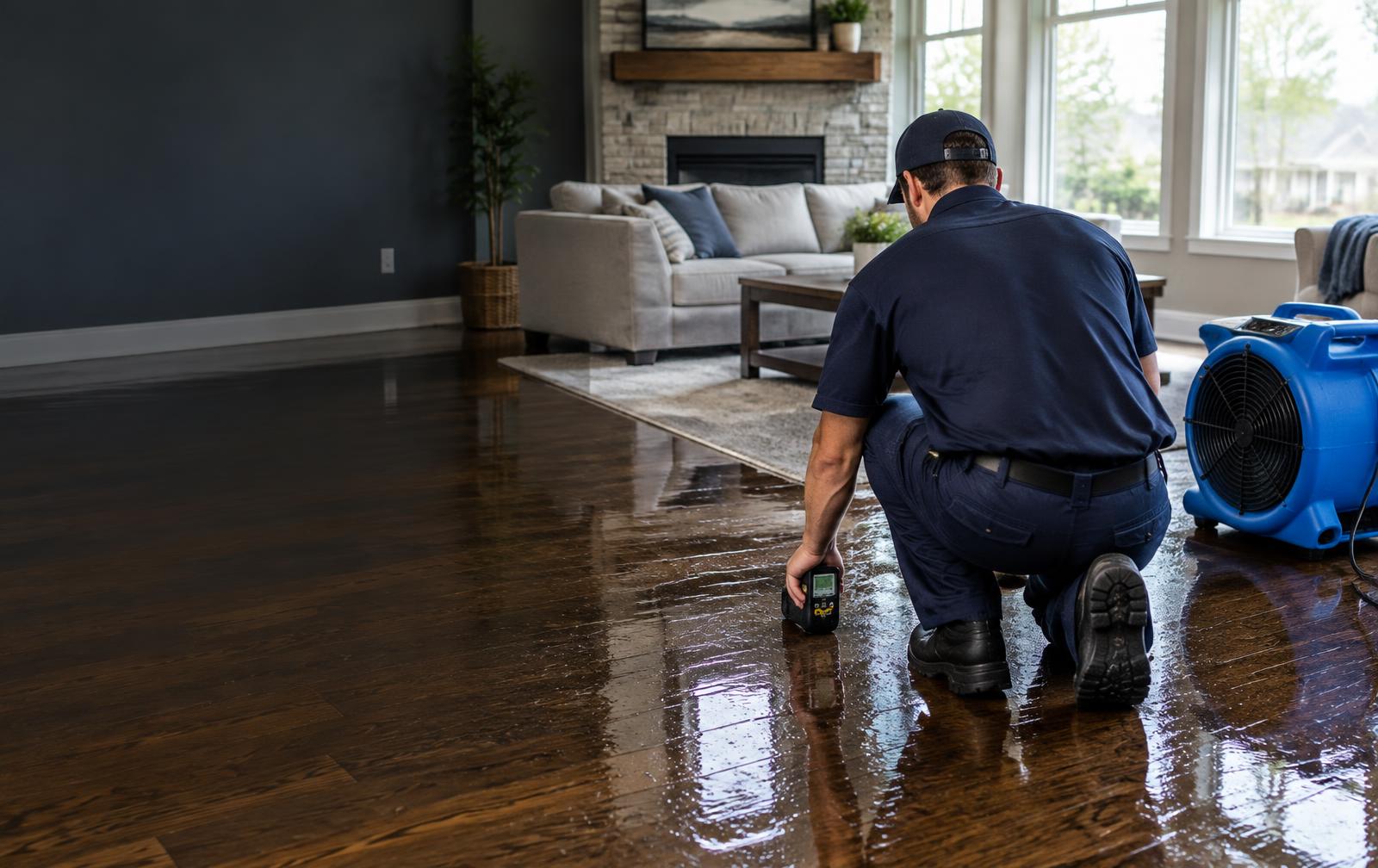
Water can move quickly through flooring, drywall, insulation and contents. A leak from a supply line, an overflowing fixture, a malfunctioning appliance, exterior rain or another source may affect areas you cannot see at first. If it is safe to do so, stop the source of water and keep people away from electrical equipment or visibly contaminated water. Photograph the affected areas before moving items when practical, but never put yourself at risk to collect documentation.
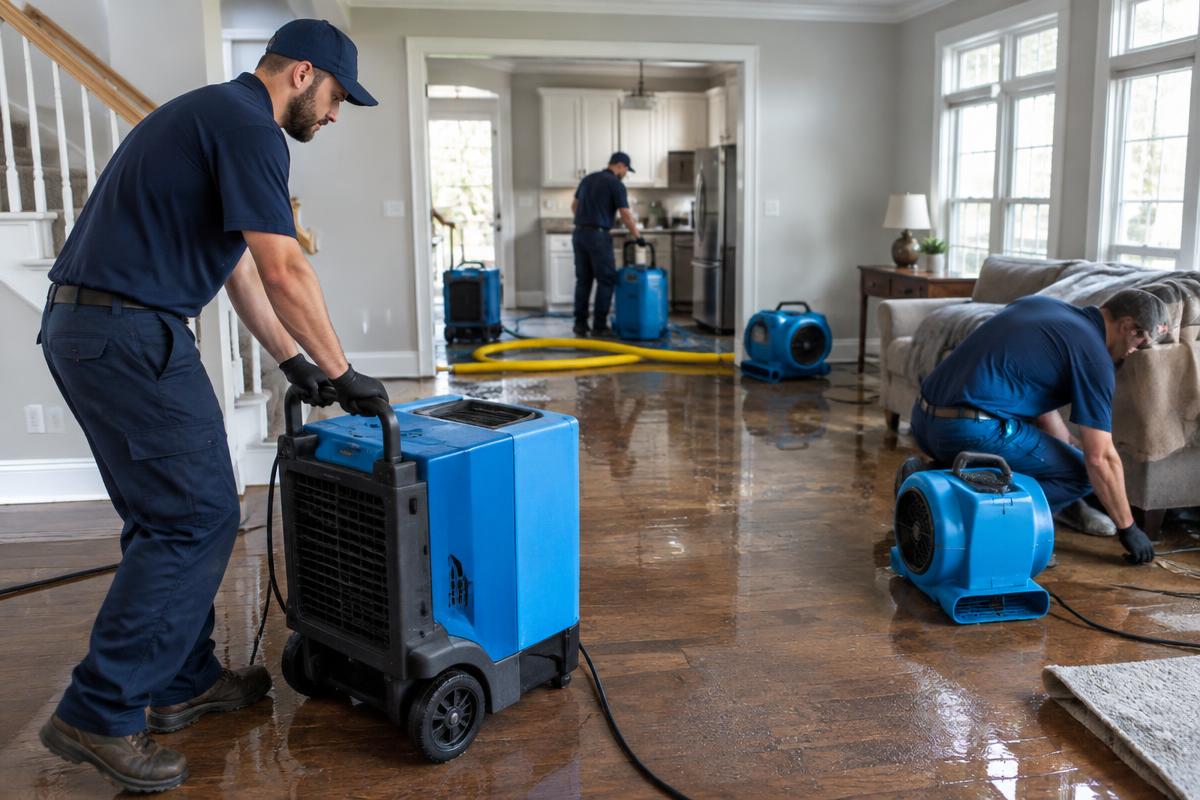
What you can't see can still be wet.
Water can travel beneath flooring and inside walls. A moisture assessment helps show where drying and follow-up checks may be needed.
The first restoration goal is to identify the source and limit further damage. Depending on conditions, work may include water extraction, removal of unsalvageable materials, drying equipment and moisture checks over time. Drying is not simply waiting for a surface to feel dry. Materials can hold moisture inside or underneath them. The scope depends on the type of water, how long it has been present and which parts of the building are affected.
Water from a clean supply line is different from a sewage backup or other contaminated source. Do not assume the water is safe based only on appearance. Our water damage service explains more about the response process and what to discuss when you call.
Fire, soot and smoke recovery
After firefighters leave, a property can still have many different kinds of damage: charred materials, soot on surfaces, smoke odor in textiles, water from suppression and openings that need protection. Return only when the authorities have said it is safe. Avoid switching on systems or disturbing damaged contents until you understand what is affected.
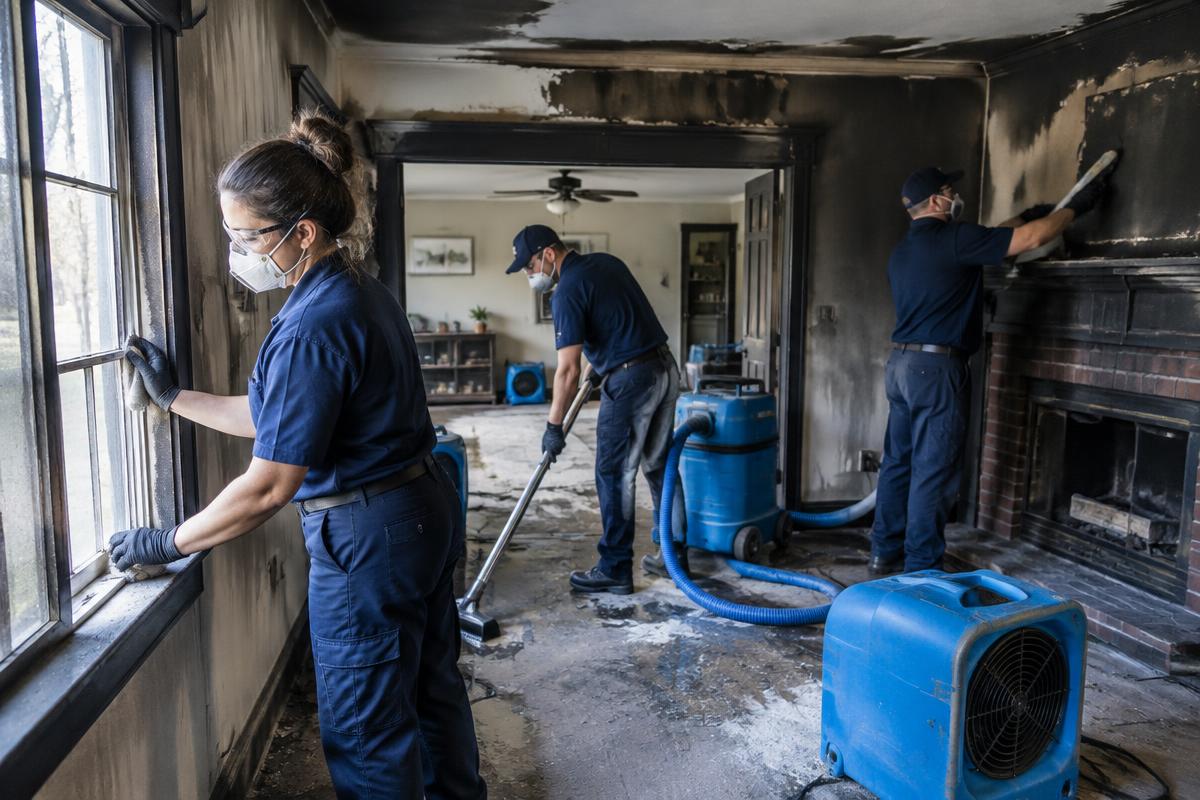
Recovery goes beyond the burn area.
Smoke residue and odor can spread through connected rooms, contents and ventilation, even where flames never reached.
Restoration after a fire may begin with an assessment of structural and contents damage. Cleaning methods vary by surface and type of residue. Smoke can migrate into rooms without obvious flame damage, so evaluating adjacent spaces matters. The work may involve soot removal, odor treatment, contents cleaning, coordination with trades and planning for repairs. A clear inventory and photos can also support conversations with an insurance adjuster.
Read more about fire damage restoration and smoke damage cleanup. If the damage is recent, call the hotline rather than waiting for an online reply.
Mold concerns begin with moisture
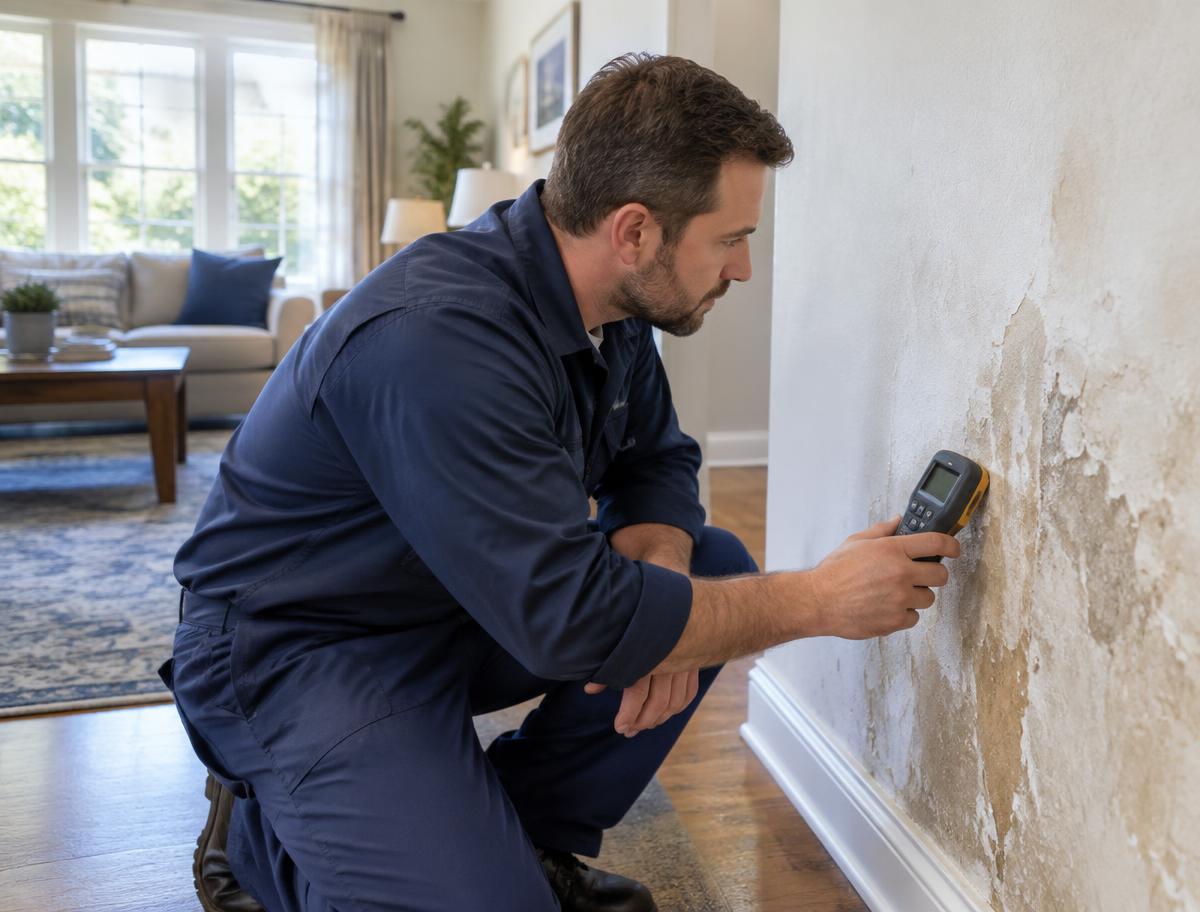
A musty odor or discoloration can point to a moisture issue, but the cause is not always visible. A leaking pipe, roof problem, condensation or incomplete drying after a previous water loss may all contribute. Removing visible material without addressing the source can leave the underlying problem unresolved. Avoid disturbing a suspect area or spreading debris through occupied rooms.
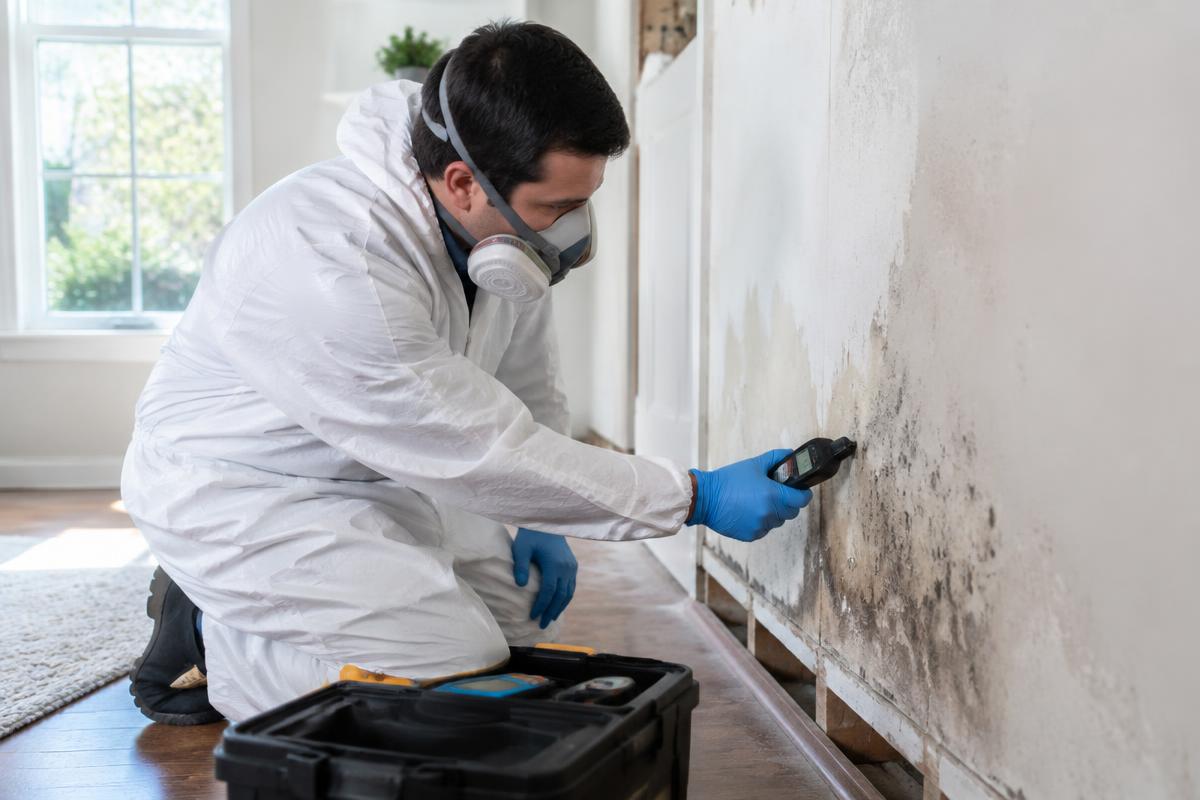
Find the moisture source first.
Visible signs are only one part of the picture. The right cleanup approach also considers how moisture reached the area and whether it remains.
An assessment looks at the affected area and the conditions that allowed moisture to remain. Depending on the situation, containment, removal of affected materials, cleaning and correction of the water source may be necessary. There is no single treatment that fits every property. If you are concerned about symptoms or health, speak with a qualified healthcare professional; a restoration company cannot diagnose a medical condition. Our mold damage page outlines the service in more detail.
Storm, specialty and commercial needs
When wind or rain damages a property, the immediate priorities may be keeping people safe and preventing additional weather exposure. Tarping, board-up, debris handling and water mitigation may all be considered depending on the loss. Never approach fallen power lines, unstable trees or compromised structures. Our storm damage service describes how the recovery process begins.
Some calls involve sensitive circumstances rather than a conventional leak or storm. Vital Restoration also handles hazmat cleanup, trauma and biohazard situations, hoarding cleanup and air duct cleaning. These situations deserve discretion and a conversation about the actual needs of the property. We will not assume that all cases can be handled the same way.
Commercial property owners and managers often need to balance safety, documentation and business continuity. A response plan may account for tenants, employees, customer areas, inventory and the parts of a building that can remain in use. Tell us how your space is used and what has been affected so we can discuss priorities.
How the response works
First, call and describe the damage. Share the address, what happened, whether the source has stopped and any immediate hazards. We can discuss the urgency and an appropriate next step. During an assessment, the team identifies affected areas, documents conditions and explains the proposed work. There may be a difference between immediate mitigation and later repairs, so ask which stage a recommendation covers.
Next, the response is tailored to the loss. Water extraction and drying, smoke cleaning, containment or securing storm openings each involve different tools and decisions. We aim to communicate what is happening, why it matters and what to expect next. Owner Tim Brown is on site at most jobs. Our team brings 40+ years of experience and IICRC-certified expertise to restoration work.
Finally, the focus shifts to getting the property back in order. Drying and cleaning should be checked against the conditions found on site. Repairs, contents and insurance coordination may follow. The schedule depends on the property and the actual scope; we do not promise an arrival or completion time before understanding the situation.
Keep a clear record.
Photos, dates and a record of emergency work can make later conversations with your insurer easier.
Insurance, documentation and a clearer claim conversation
An insurance claim can feel overwhelming alongside the physical damage. When safe, take photos of affected areas and keep notes about when you discovered the loss and what steps you took to reduce additional damage. Avoid discarding damaged items before discussing documentation requirements with your insurer, unless safety or local requirements dictate otherwise.
Vital Restoration can document conditions, explain the proposed restoration scope and communicate with your insurance adjuster. We can help make the conversation clearer, but your policy and insurer determine coverage. We do not promise a particular claim outcome. If you are unsure whether to file a claim, ask your insurer about your coverage and deductible while we discuss the restoration work itself.
Keep a record of conversations, photos, invoices and any emergency work authorized. A simple timeline of events can be useful later. If the loss involves a tenant or managed property, make sure the relevant owner or manager is included in decisions about access and scope.
Before a crew arrives: a safety-first checklist
If there is an active fire or immediate danger, call 911. For water damage, stop the source only if you can do so safely. Stay out of standing water near outlets or electrical equipment. Do not enter a space with suspected structural damage. If the loss involves possible sewage or hazardous materials, keep people and pets away from the area and wait for guidance. Do not run heating or ventilation equipment through a visibly damaged system without professional advice.
After everyone is safe, note the address, a callback number and a brief description of what you can see. Share any relevant access details, such as a gate or property manager contact. If you can safely take photos, record the affected areas without moving through hazards. The goal is not to solve everything yourself. It is to make a good first decision and get appropriate help.
Why call Vital Restoration for Divernon?
In a property emergency, you need a team that can explain the work as well as carry it out. Vital Restoration offers a 24/7 emergency hotline, 40+ years of experience, IICRC certification and EPA Lead-Safe certification. We work with homeowners and commercial clients and can coordinate documentation with insurance adjusters. The owner is personally present on most jobs.
Our headquarters is at 6 S Linden Ave, South San Francisco, CA 94080. Divernon is part of the areas we serve; this page does not claim that we have a separate office in Divernon. To ask about dispatch or availability for your exact address, call us directly. We would rather give you an honest answer about your situation than a generic promise based on a city name.
When a loss is stressful, clear information matters. Tell us what happened, ask questions and let us help identify a sensible next step. You can also request a free estimate if the matter is not an immediate emergency.